Procurement teams in our category spend significant time on quality benchmarks, technical specifications, BOQ structuring, and warranty terms. The single largest project risk that almost no procurement team asks about is the financial health of the vendor. Vendor insolvency mid-project is the catastrophic risk in this industry, and it is invisible until it isn't.
This is the conversation that needs to happen before the PO is signed.
Why this risk is unique to our category. Signage and large-format printing vendors operate on relatively thin margins, with significant working capital tied up in materials inventory, work-in-progress, and receivables. The typical project structure (30 percent advance, 40 percent on production, 30 percent on install) creates a cash-flow profile where vendors carry meaningful exposure for two to three months on every project. Vendors who take on more projects than their working capital can support are operating in a fragile zone where one delayed receivable from a single client can cascade into payment defaults to suppliers, halted production, and ultimately project abandonment.
The cost of vendor insolvency mid-project. Direct costs include the unrecoverable advance, the cost of identifying and onboarding a replacement vendor, the cost of re-tendering the remaining scope, and the schedule slip while the new vendor mobilises. Indirect costs include the brand impact at sites that have partial installations stranded, the morale impact on internal stakeholders, and the executive time spent on crisis management. A typical mid-project vendor failure costs the client between 30 and 100 percent of the original project value depending on how much of the project had been delivered.
The warning signs. Vendors heading toward insolvency exhibit consistent patterns. Slow response on technical questions. Repeated requests for advance payments outside the milestone schedule. Quiet substitution of lower-grade materials. Reduction in floor headcount. Cancelled site visits. Excuses about supplier delays. Quietly extended timelines without formal change orders. Slipped invoice payments that the vendor blames on their own clients. Each of these is a leading indicator. Procurement teams who notice them early can take protective action. Procurement teams who don't are caught flat-footed when the formal collapse happens.
The due diligence at vendor selection. Before awarding a project, procurement teams should request: audited financial statements for the last three years, GST returns for the last 12 months, references on three projects of similar scale, banker references, and a statement of current project load and capacity. The financial statements show whether the vendor is profitable, whether they carry meaningful debt, and whether their working capital is healthy. The GST returns confirm operational continuity and reveal any sharp drops in turnover that might indicate trouble. The references reveal payment behaviour to suppliers and delivery performance to clients. The banker references are confidential signals about creditworthiness. The capacity statement reveals whether your project can actually be absorbed without overloading the vendor.
The due diligence at project start. Beyond the vendor's overall financial health, the project-specific structure matters. The advance payment percentage should reflect the vendor's working capital constraints without being so high that the client is exposed if the vendor collapses. A 30 percent advance is standard. A 50 percent advance is borderline. A 100 percent advance is a procurement red flag. Milestone payments should be tied to verifiable deliverables (production photographs, dispatch evidence, install signoff) rather than to time-elapsed schedules. Each milestone payment should be conditional on the vendor having no outstanding payment defaults to their own suppliers, where the procurement team can credibly verify this.
The contractual protections. The PO should include several protections against vendor insolvency: a clause requiring the vendor to deliver complete fabrication drawings and BOMs upfront so that a replacement vendor can pick up the work, a clause assigning IP and design ownership to the client so that drawings can be reused, a step-in right that allows the client to take over work-in-progress at the vendor's premises in case of insolvency, and a payment-against-evidence structure that limits the client's exposure at any point. These clauses are unusual in standard signage POs but are standard practice in larger industrial procurement. Procurement teams running multi-state projects above a certain value threshold should treat them as table stakes.
The insurance options. Trade credit insurance and payment-protection products exist for procurement teams concerned about vendor solvency. The premiums are small relative to the project value, and the protection is meaningful in the rare cases where it triggers. For projects above a certain value or strategic importance, procurement teams should evaluate these options.
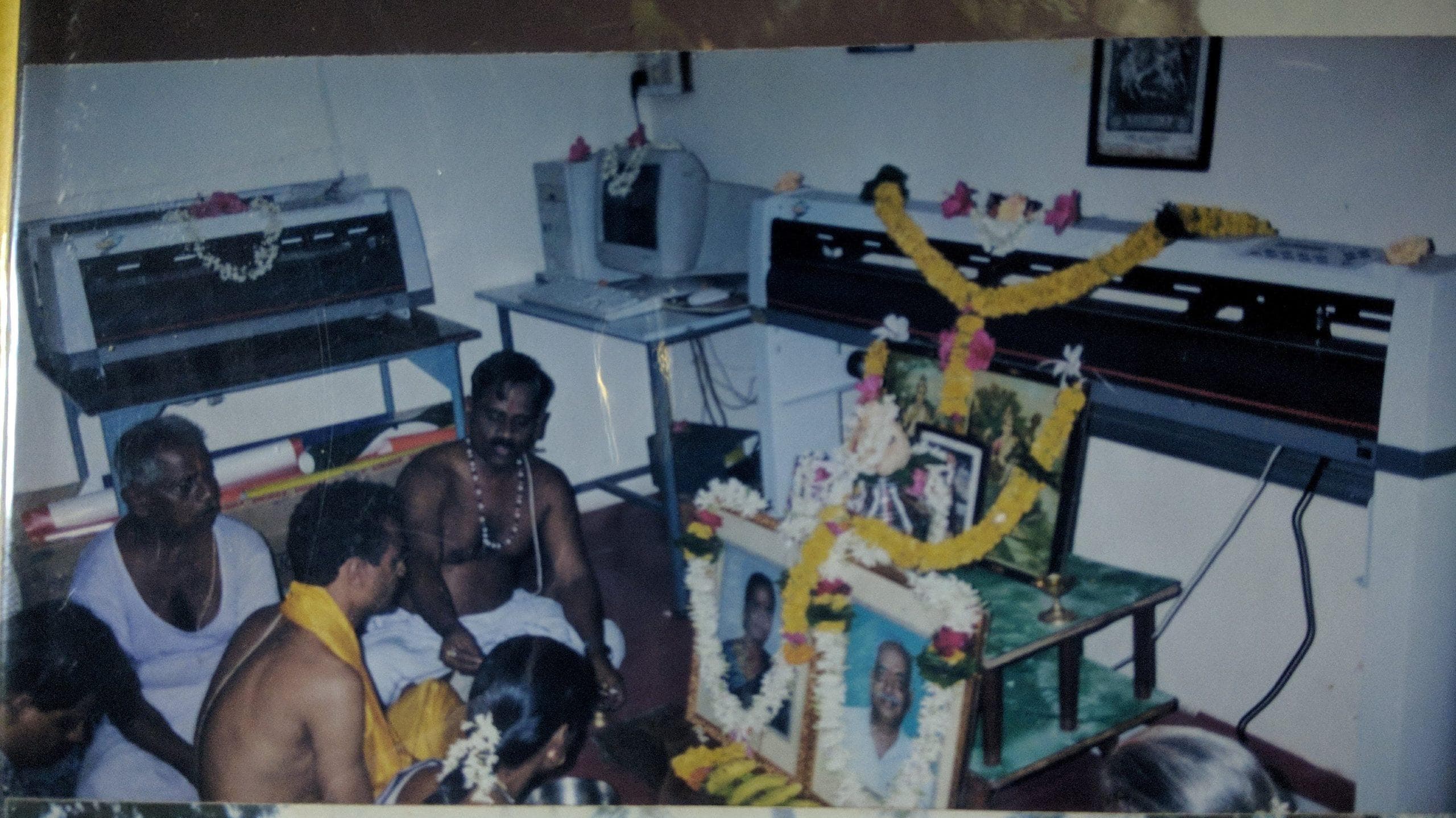
The vendor's own protective factors. Some vendor characteristics correlate with lower insolvency risk: long operating history (vendors with 15+ years of continuous operation have survived multiple economic cycles), diverse client base (vendors who depend on a single large client are exposed to that client's payment behaviour), owned premises and equipment (vendors who lease everything are more vulnerable to working capital pressure), defined succession in the leadership, and visible reinvestment in capacity. None of these are guarantees, but the combination of several is a meaningfully lower risk profile than a vendor that has none.
The sector concentration risk. Vendors who concentrate in a single client sector are exposed to that sector's cyclicality. A vendor whose 80 percent revenue comes from real estate signage is exposed to construction-cycle slowdowns. A vendor whose revenue is spread across retail, banking, manufacturing, hospitality, and public sector is more resilient to single-sector shocks. Procurement teams should ask about sector mix and weight it accordingly.
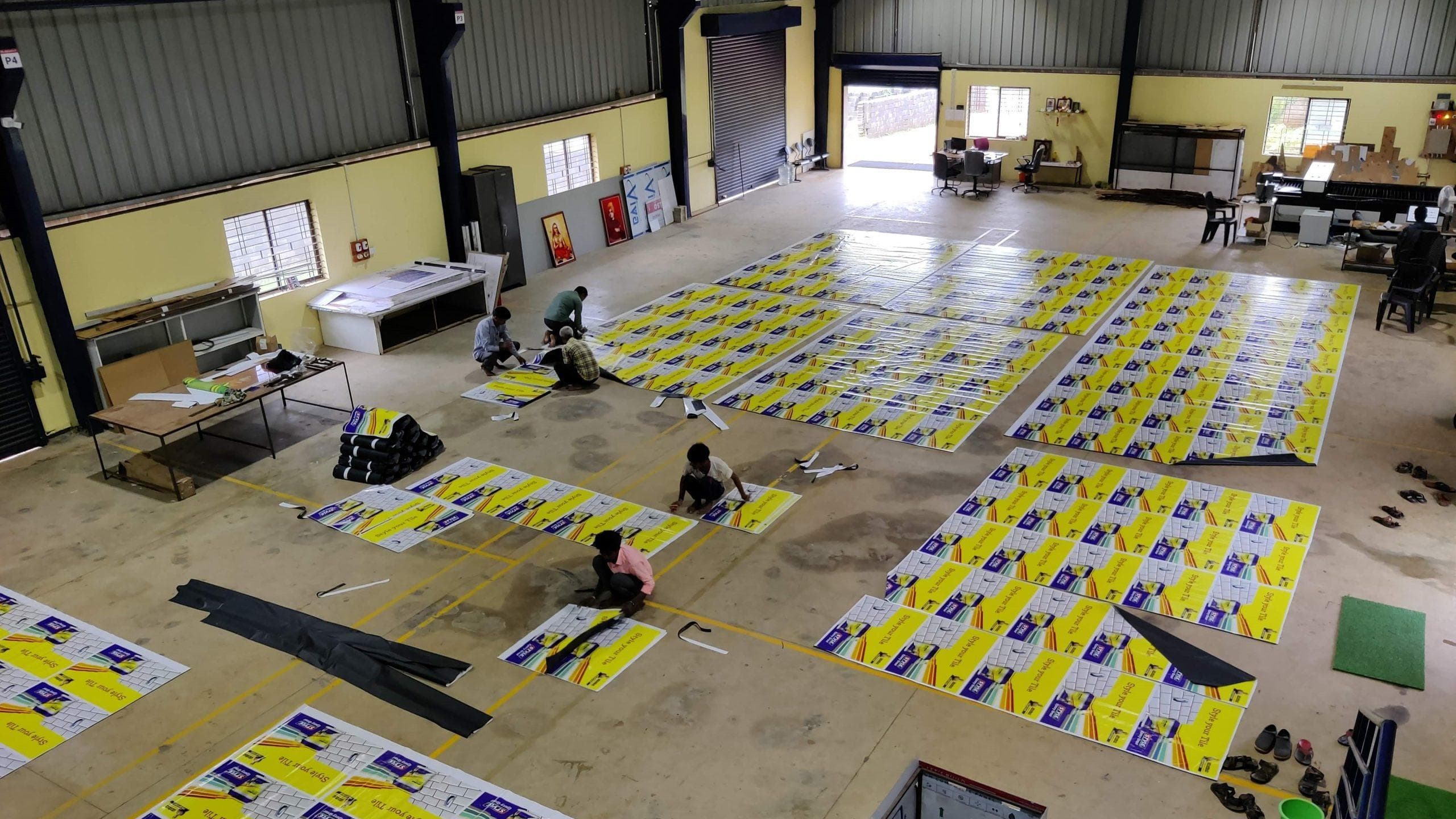
The red flags worth walking away from. A vendor who refuses to share financial statements when asked, a vendor whose references avoid endorsing them on payment behaviour, a vendor with multiple recent changes in trade name or registration, a vendor whose floor visit reveals significantly less activity than the quoted capacity would suggest, and a vendor whose pricing is meaningfully below market for what should be similar capability. Each of these is reason to pause and investigate further. Sometimes the explanation is benign. Often it is not.
The positive signal. The flip side of all this is recognising the vendors who have invested in operating sustainably for the long term. They have audited financials, GST compliance discipline, paid suppliers on time, owned production capacity, multi-sector revenue, and reinvestment patterns visible in their facility. These vendors quote at fair market rates rather than at desperate ones. They operate within their capacity rather than overcommitting. They survive industry cycles. They are still around to honour the AMC three years after the project closed.
For procurement teams who want to evaluate vendor financial health as part of selection, our /services pages document our scope and capacity, the /quality page covers the controls that protect production continuity, and /amc covers the post-install service commitment that depends on long-term operational viability. References, financial documentation, and capacity statements are available on request through the /contact form. We have been operating continuously since 1997 and are happy to share any documentation that helps procurement teams make a confident vendor decision.