Vehicle branding has quietly become one of the most regulated surfaces in Indian advertising. What used to be a simple wrap job for a delivery fleet now sits at the intersection of the Motor Vehicles Act, state RTO circulars, municipal advertising bye-laws, and brand guidelines from the OEM whose vehicle is being modified. For procurement teams running fleet liveries across states, the cost of getting compliance wrong is not the rework — it is the impounded vehicle, the FIR against the driver, and the brand asset stuck in a yard for two weeks while paperwork is sorted.
The foundational rule comes from Section 52 of the Motor Vehicles Act, which restricts material alterations to a registered vehicle without prior approval from the registering authority. Most state RTOs interpret livery and branding as a permissible cosmetic change provided the registration plate, identification numbers, fitness certificate details, and statutory markings remain fully visible. The practical test that field officers apply is straightforward: if a constable cannot read the number plate, the chassis number window, the goods carrier marking, or the speed governor sticker from a normal viewing distance, the wrap is non-compliant. Fleet managers should require their signage vendor to deliver a marked-up template showing the legally protected zones before printing begins.
Commercial vehicles add another layer through the Central Motor Vehicles Rules requirements on reflective tape, contour marking, and rear underrun protection. A wrap that covers the white reflective tape on the side of a goods carrier, even partially, will fail the next fitness inspection. The cleaner approach is to design the artwork around the reflective bands rather than over them, and to specify retroreflective tape that matches the colour of the wrap so the visual identity reads as one continuous panel during daytime and the safety markings still glow at night when headlights hit them.
State-level rules diverge sharply once the vehicle leaves the highway. Karnataka, Maharashtra, Tamil Nadu, and Delhi each operate their own outdoor advertising bye-laws that govern moving advertisements within municipal limits. In several metros, vehicles parked on public roads displaying third-party advertising are treated as outdoor media units and need a separate advertising permission from the local municipal corporation. This is most common in mall parking, last-mile delivery hubs, and brand activation tours. The difference between a compliant fleet livery and an unpermitted mobile hoarding is whether the branding promotes the registered owner of the vehicle or a third-party advertiser. Procurement teams onboarding a new wrap vendor should ask explicitly which category their planned campaign falls into and obtain written confirmation before artwork is approved.
Material choice is the next compliance touchpoint. The default specification for fleet liveries on metal panels is a cast vinyl with an air-egress adhesive, finished with a matched laminate for UV protection. For passenger-carrying vehicles, the laminate must be non-reflective in the driver's field of vision — a glossy wrap on the bonnet that throws sunlight into the windscreen is a documented cause of forward visibility complaints during inspection. For school buses, staff transport vehicles, and ambulances, statutory colour codes override brand palette: yellow for school transport, the Star of Life pattern for ambulances. A wrap vendor that does not flag these constraints during the brief is the wrong vendor.
The compliance file that procurement should retain for every wrapped vehicle includes seven documents. The original RC copy showing the registered owner. The fitness certificate dated after the wrap was applied if the vehicle is commercial. A photograph of the four sides and the rear of the wrapped vehicle with the registration plate clearly readable. The vendor's invoice and material data sheet identifying the cast vinyl brand and adhesive grade. The municipal advertising permission if applicable. The OEM's no-objection if the vehicle is under warranty and the wrap is being applied to a body panel that may affect the paint warranty. And finally, a removal plan that specifies how the wrap will be lifted at end of campaign without damaging the underlying paint — most procurement contracts now make end-of-campaign removal a vendor obligation rather than a separate purchase.
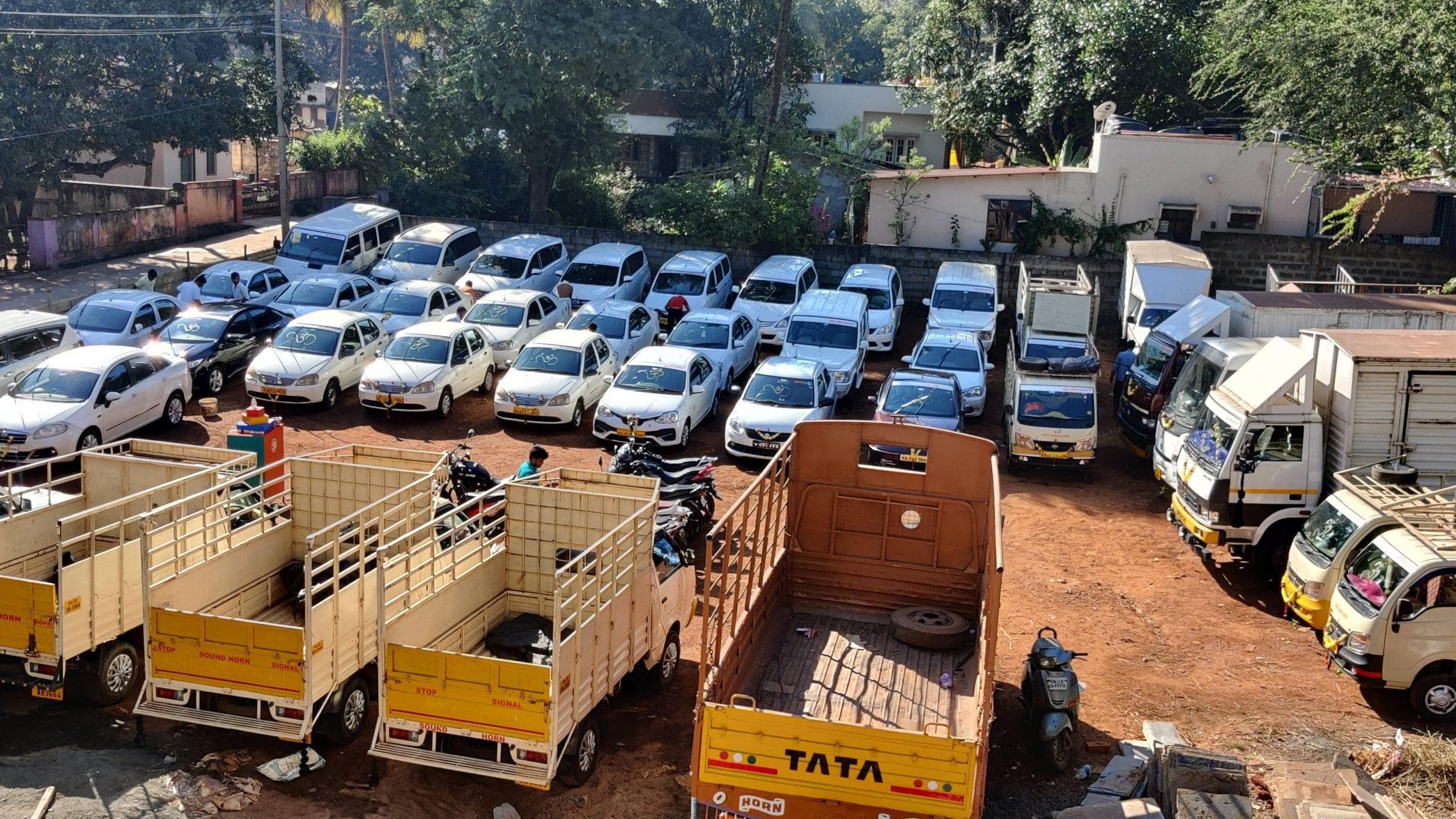
For pan-India fleets the operational challenge is consistency. A wrap applied in Bengaluru must look identical to one applied in Chandigarh six weeks later, and both must survive the same monsoon. This is where vendor depth matters more than vendor price. A fabricator with documented application standards, trained installers across multiple cities, and a single point of accountability for warranty claims will save more in repeat work than a low-bid local vendor will save in unit cost. Sushant Industries operates installation crews across eighteen states with a standard application protocol and warranty desk; the operational notes on /works show how this translates into delivered consistency for multi-city retail and BFSI fleets.
The regulatory direction over the next two years is toward more enforcement rather than more rules. State RTOs are increasingly using the VAHAN database to cross-reference vehicle photographs from automated traffic enforcement cameras against the registered colour and configuration on file. Fleets that update their VAHAN record after a major rebrand avoid the awkward situation of being flagged as a potentially altered vehicle every time they cross a tollbooth camera. The five-minute administrative step of filing the change with the RTO is the cheapest insurance available against a long roadside conversation with a transport officer.
A separate operational area is interstate movement. Vehicles wrapped in one state but operating primarily in another may be questioned at state borders if the apparent identity does not match the registration. The RC, the state of registration, and the visible branding should tell a coherent story to a roadside officer. For e-commerce and logistics fleets that move freely between states, the practical workaround is to ensure the registration plate, the state code, and the operator name are all clearly visible on the wrap, and that the wrap colour scheme does not inadvertently mimic the livery of any government agency vehicle. Several years ago a private logistics fleet ran into trouble at multiple checkpoints because their dark blue and white livery was being mistaken for a particular government vehicle pattern; the resolution required a partial rebrand.
The summary view for a procurement team writing a vehicle branding RFP in 2026 is this: insist on documented material specifications, written confirmation of statutory clearances, photographic evidence of post-application compliance, and a removal clause in the contract. Make the vendor responsible for the compliance file, not just the artwork. A signage company that treats vehicle branding as a regulated service rather than a creative deliverable is the partner you want when an officer flags one of your trucks at three in the morning at a state border. The fleet visible on /works includes wraps applied across multiple Indian states under this compliance discipline, and the documentation flow with /contact is structured to handle the certificate requests that procurement and audit teams ask for during their own internal reviews.
A final operational note on warranties. The OEM warranty on the vehicle paint is sometimes affected by the application of an aftermarket wrap, particularly if the wrap is removed incorrectly or if the adhesive damages the underlying clear coat. Most major vehicle manufacturers in India have published positions on this question, and the vendors who routinely work with branded fleets have established working understandings with the dealer networks. Procurement should ensure the wrap vendor uses application and removal techniques that preserve the OEM paint warranty, and should retain the warranty acknowledgement as part of the compliance file. This single document protects the residual value of the fleet at the end of the campaign or the lease term.