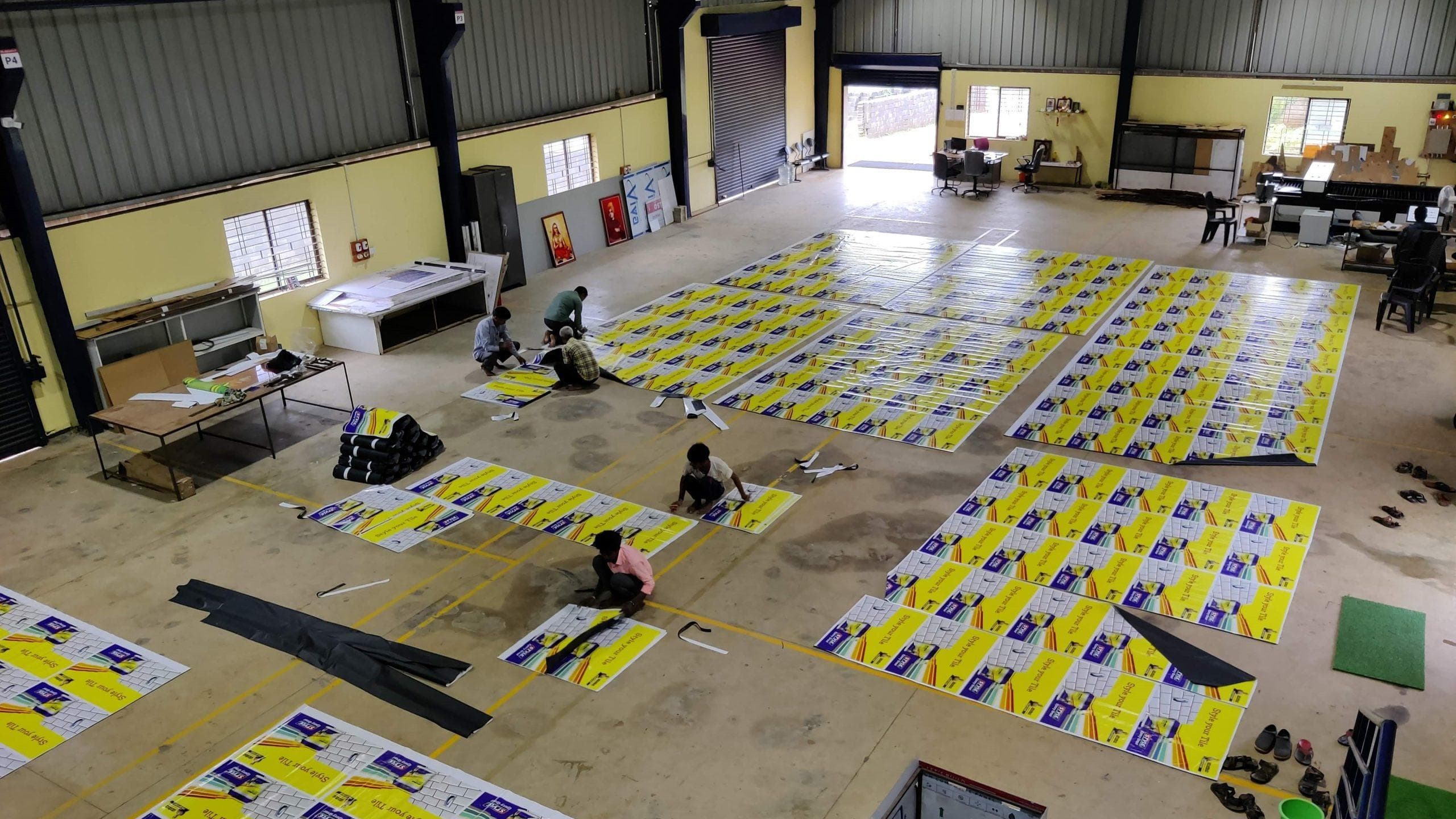
Quality control on a signage and large-format printing production floor is not a single inspection at the end. It is a sequence of checkpoints, each catching a different category of defect, each owned by a different person, each documented with traceability back to the project file. Vendors who treat QC as a final dispatch step ship defects. Vendors who treat QC as an embedded process catch defects when they are still cheap to fix.
This matters for procurement teams because the visible quality of an installed sign is a lagging indicator. The leading indicator is what happens on the production floor between material receipt and dispatch.
The inbound checkpoint. Materials arriving at the floor are inspected against the purchase order before they are stocked. ACP sheets are checked for thickness, color batch, and surface defects. Acrylic sheets are checked for scratches, chips, and color uniformity. Vinyl rolls are checked for color match against a reference swatch and for any fold or crease damage in transit. LED modules are tested in batches for output consistency and color temperature. Powder coating chemicals are checked for batch number and shelf life. A material that fails the inbound check is rejected at this stage rather than discovered on the cutting machine three days later.
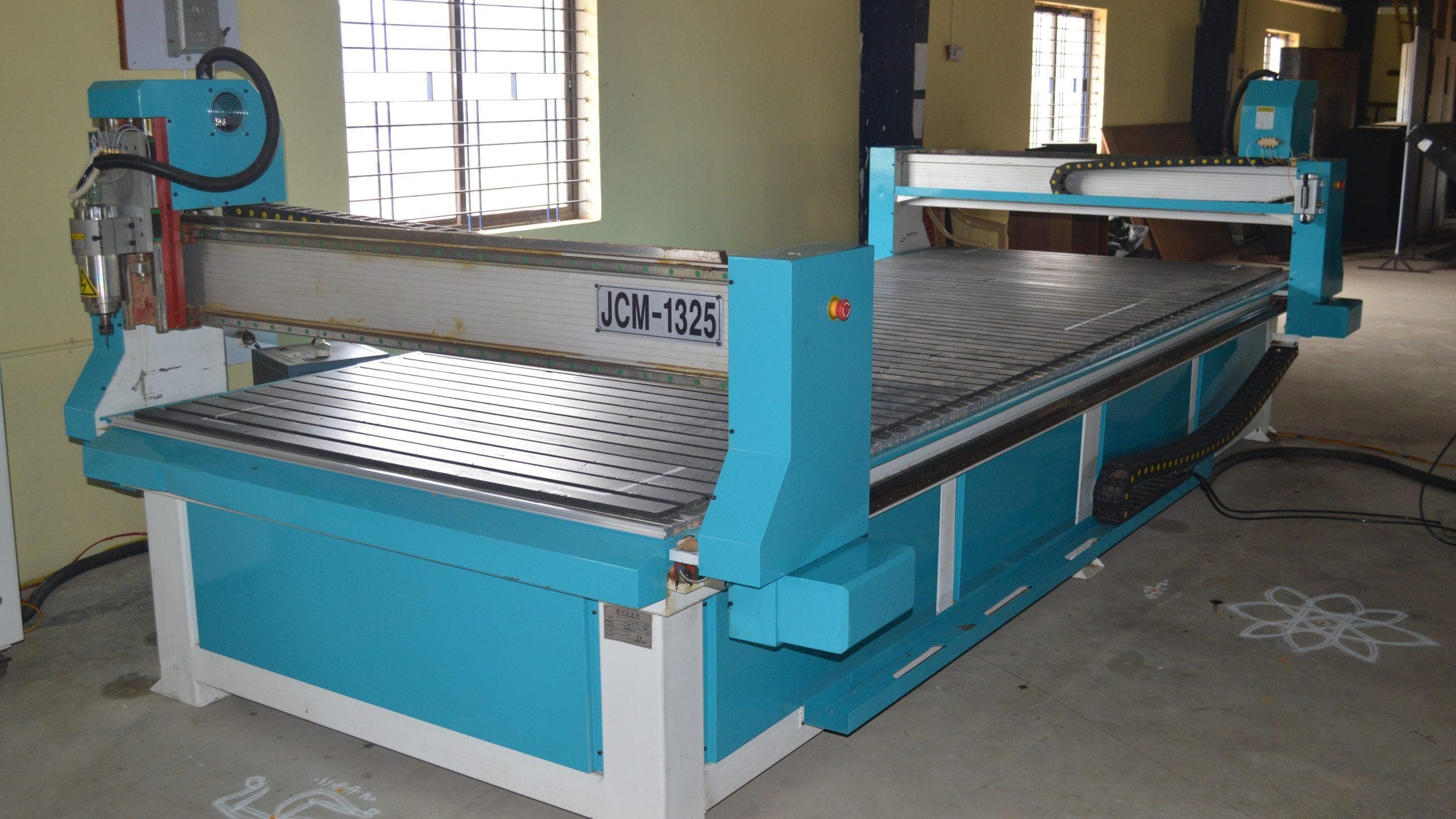
The machine-setup checkpoint. Before any production run starts on a CNC router, a UV printer, or a laser cutter, the operator runs a setup verification. On the printer, this means a print-head nozzle check, a color calibration print against the project's ICC profile, and a substrate adhesion test on a sample of the actual material being used. On the CNC, this means a tool offset verification and a test cut on scrap. On the laser, this means a focus check and a power calibration on the substrate type. Setup verification takes between 15 and 30 minutes. Skipping it produces an entire production batch with a consistent defect.
The in-process checkpoint. During a long production run, the operator pulls samples at defined intervals (typically every 30 minutes for printing, every 10 pieces for fabrication) and checks against the reference. Color drift on a UV printer, blade wear on a CNC, focus drift on a laser, and feed irregularities on a vinyl plotter all manifest as in-process drift before they manifest as a finished defect. The in-process checkpoint catches the drift early. The data is logged on a job sheet that travels with the work order.
The assembly checkpoint. Once individual components are produced, they are dry-assembled in the workshop before being packed for dispatch. For a channel-letter set, this means flat-laying all letters in their final arrangement and verifying alignment, spacing, and electrical connections. For an ACP facade, this means assembling sample panels and verifying the joinery, the routing detail, and the fit of any cutouts. The dry-assembly catches dimensional errors that survived the individual-component QC. Anything that does not assemble cleanly here will not assemble cleanly on site.
The electrical checkpoint. Every illumination circuit is energised in the workshop before dispatch. LED modules are checked for full-output operation. Driver units are checked for correct voltage and load matching. Wiring connections are checked for polarity. Continuity of every solder joint is verified. The standard for dispatch is that the sign should illuminate fully on first power-up at site. A sign that illuminates partially on site has had its electrical QC skipped.
The pre-dispatch checkpoint. The finished sign is photographed against a neutral background. The photograph is filed in the project folder. The packaging is reviewed against the dispatch route, with attention to whether the sign needs additional cushioning for road transit, weather protection for monsoon-season dispatches, or special handling instructions for fragile elements. The packaging itself is QC'd. A sign that arrives damaged because of packaging failure costs as much as a sign that arrives damaged because of fabrication failure, and the cause is harder to assign.
The install-day checkpoint. The install crew unpacks on site and inspects before mounting. Damage in transit, missing components, and any deviation from the project file are documented before installation begins. The client's site representative is informed of any deviations and the install proceeds only after agreement. This protects both parties from later disputes about who was responsible for what.
The post-install checkpoint. After installation, the crew tests illumination, checks alignment against the design intent, photographs the completed installation, and walks the site representative through a snag-list inspection. Any open snag is logged with target closure date. The handover document is signed.
Documentation discipline. Each checkpoint produces a logged record that travels with the project file. The fabrication QC sheet, the electrical test sheet, the dispatch packaging note, the install commissioning sheet. These documents are not bureaucratic, they are the evidence that the QC process actually ran. A vendor who can produce the project's QC documentation on demand is a vendor whose QC is real. A vendor who cannot is a vendor whose QC is theatre.
The role of the floor supervisor. QC is not the responsibility of a separate inspector. It is the responsibility of the floor supervisor, who walks the floor several times each shift, observes setup and in-process checks, intervenes when an operator is shortcutting a checkpoint, and signs off on each batch before it moves to the next stage. The floor supervisor is the human firewall against defective production. The supervisor's authority and experience matter more than any inspection checklist.
The relationship between QC and warranty. Vendors who run honest QC have warranty claim rates of around two to four percent of installations within the first year. Vendors who skip QC have warranty claim rates of fifteen to twenty percent. The cost of running QC is far less than the cost of servicing warranty claims, and the operational cost of warranty visits compounds because they require demobilising an install crew or dispatching an AMC team to a site that has already been signed off. Procurement teams should ask vendors for their warranty claim rate. The number says more about production quality than any sales presentation can.
The relationship between QC and AMC pricing. Signs that were produced with rigorous QC require fewer service interventions over their lifetime. AMC pricing for these installations should reflect the lower service load. The /amc page on our site explains how AMC pricing scales with site count, distance, and service-level expectations. The /quality page covers our specific QC sequence and the documentation we maintain for every project.
QC is the most invisible part of vendor capability and the most predictive of long-term satisfaction. The procurement team that asks about QC during vendor selection is the team that has fewer warranty conversations later. For projects where production quality is non-negotiable, our /services pages document the relevant production controls and the /works gallery shows installations that have aged well over multi-year horizons.