Almost every dispute on a signage project traces back to a timeline misunderstanding that was set in week one. The client's procurement calendar said four weeks. The vendor's verbal commitment said four weeks. The installation actually completed in eight weeks. Both parties feel hard done by. Both parties were operating on different definitions of what a four-week timeline includes.
A realistic production timeline for signage work has six distinct phases, and skipping the conversation about each one is the single largest source of avoidable friction in our category.
Phase one is design lock. This is the calendar period between the client signing off on the brand brief and the vendor signing off on the production-ready drawing. In a clean project this takes between five and ten working days. In a project where the brand brief is still being refined, where the legal team needs to review trademark usage on the signage, or where multiple stakeholders need to approve the design, this can stretch to three weeks. The vendor cannot start procurement until design is locked. Every day of design slippage is a day of timeline slippage.
Phase two is procurement and material readiness. Standard substrates like 4mm ACP and standard LED modules are typically in stock at established vendors. Specialty items, including custom colour ACP, branded face vinyl, particular acrylic thickness in a specific colour, and OEM-specific LED modules, can carry lead times of two to four weeks. If the design specifies anything non-standard, this phase becomes the critical path. The vendor should disclose the longest-lead item upfront. The client should decide whether the brand requirement justifies the timeline impact.
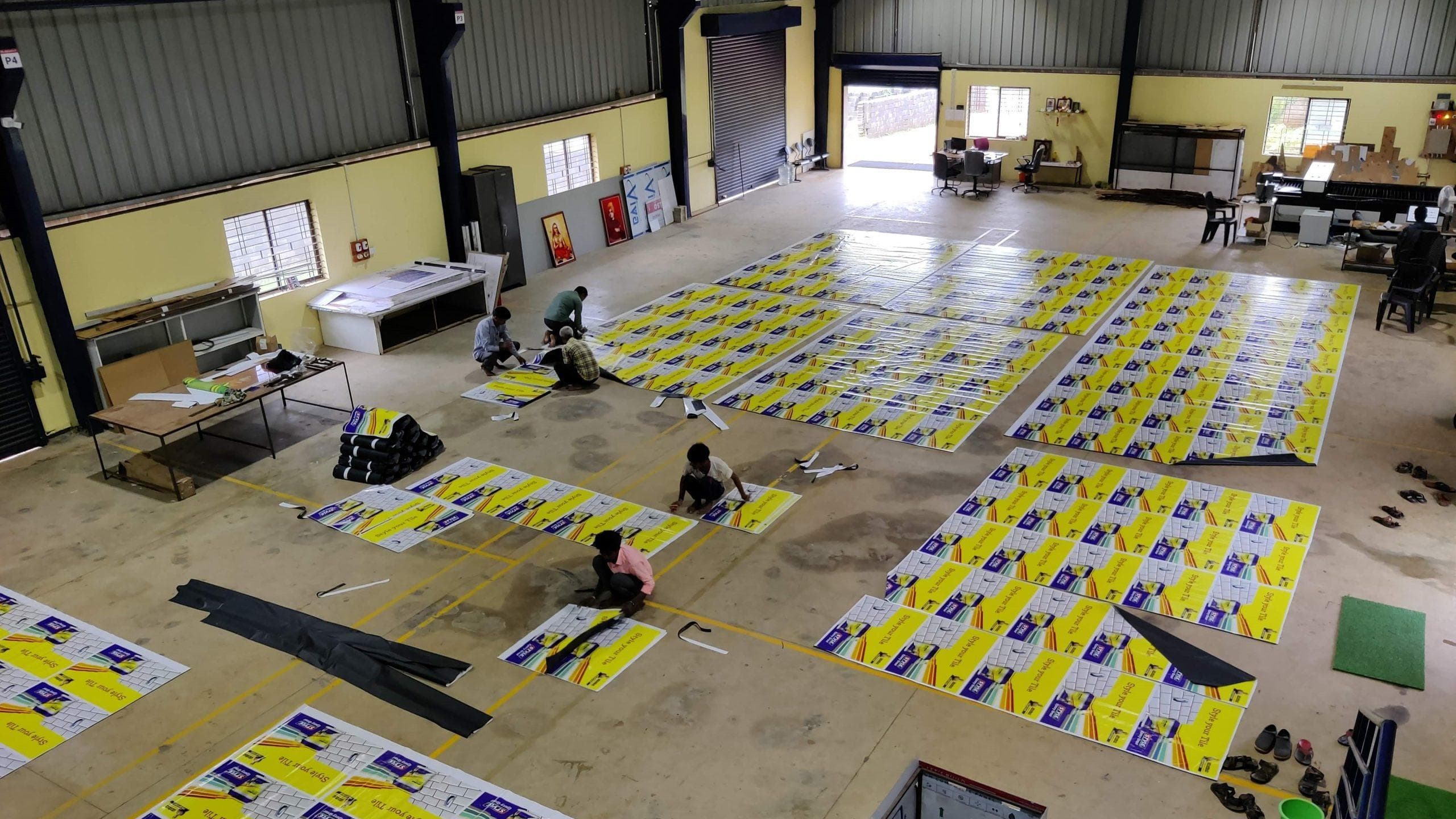
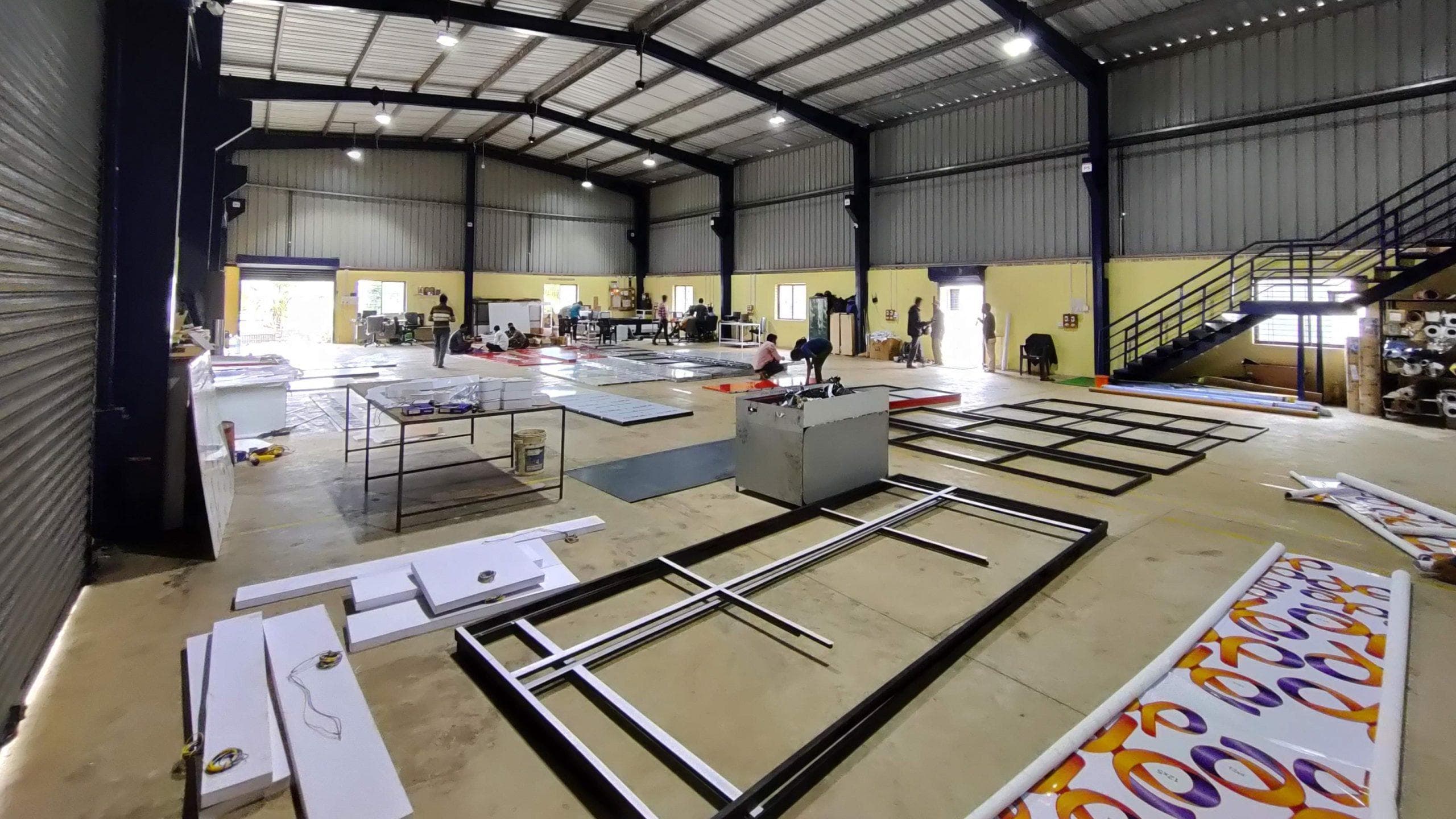
Phase three is fabrication. For a standard channel letter set with five to seven letters, fabrication takes between five and seven working days from material receipt to finished assembly. For a large pylon sign with structural components, fabrication takes between ten and fifteen working days. For a back-lit ACP facade with custom CNC profiles, fabrication takes between seven and twelve working days. These numbers assume a single fabrication line working at normal load. If the fabrication shop is running ten projects concurrently, your project will queue. A vendor running honest capacity should communicate this upfront.
Phase four is quality control and pre-dispatch. This phase is where most vendors compress and where most install-day surprises originate. A proper QC sequence involves a visual inspection against drawing, an electrical continuity check on every illumination circuit, a fitment dry-run where the sign is assembled flat in the workshop to verify no part is missing or misaligned, and a packaging review against the dispatch route. This takes between one and two days for a standard project. Skipping it saves the calendar but transfers the risk to the install crew, who will discover problems on a rooftop instead of in a workshop.
Phase five is logistics and dispatch. For local installations within Karnataka, transit takes one to two days. For installations elsewhere in South India, transit takes two to four days. For multi-state rollouts spanning North and East India, transit takes four to seven days per shipment depending on route, mode, and clearance requirements. The dispatch sequence matters. Sites that are blocked by access constraints or permit windows should dispatch first. Sites that are flexible can dispatch later. A vendor with experience in multi-city logistics will have a dispatch sequence document, not just a cumulative ship date.
Phase six is installation and signoff. A standard channel letter install takes between four and eight hours per site, including mobilisation, electrical termination, alignment, and snag closure. A pylon installation takes between one and three days depending on civil work requirements. A facade ACP install with CNC features takes between two and five days. The install window assumes that the site is ready, the permit is in hand, the electrical supply is live, and access is granted. Any of these missing extends the window.
Adding it up. A standard single-site channel letter project, with no surprises, runs between three and four weeks from PO to handover. A multi-site rollout of ten to twenty similar installations runs between six and ten weeks from PO to last-site signoff. A complex large-format installation with structural elements runs between eight and twelve weeks. A pan-India rollout of fifty to a hundred sites runs between twelve and twenty weeks depending on the staging strategy.
These are realistic numbers for vendors operating with discipline. They are not the numbers a vendor will quote when they're trying to win an RFQ. The vendor competing on speed will quote four weeks for a project that should take seven, and then deliver in nine. The vendor competing on honesty will quote seven and deliver in seven. Procurement teams need to read the timeline language critically.
The variables that compress timelines: standard designs with no custom material requirements, single-site or geographically clustered installs, sites with confirmed access and electrical readiness, decisions made by a single signoff authority, and fabrication slot availability at the vendor.
The variables that extend timelines: custom material specifications, multi-stakeholder approval chains, sites in restricted access zones (malls, secured industrial parks, public-sector facilities), monsoon season constraints on outdoor installations, festival season overlap with high vendor load, and brand-standard reviews that loop back to design changes.
A mature vendor builds these variables into the timeline conversation upfront. The Gantt chart is not a marketing artefact, it is an operational document with named owners against each milestone, defined dependency arrows, and a critical path highlighted. The vendor and client review the chart weekly during the project. Slippage on any node triggers a replan rather than a silent compression of downstream phases.
The other underappreciated timeline reality is monsoon. In coastal South India and the Western Ghats, June through September is genuinely difficult for outdoor installations. Continuous rain, wet facades, electrical safety constraints, and access limitations all compress the available install window. A project planned for July execution should add a 30 percent buffer. A project planned for January execution does not need this buffer.
The practical procurement guidance: ask the vendor for a phase-wise timeline with named owners, ask which phase is the critical path for your specific scope, ask what the slip-risk is on each phase, and ask what the contingency plan is if the slip exceeds the buffer. A vendor who can answer these questions confidently is a vendor who has run this kind of project before.
For scope-specific timeline estimates, our /services pages outline typical durations for each category, and the /works gallery shows projects with documented start-to-finish dates. To request a phase-wise project plan for a specific scope, the /contact form routes directly to project planning.