Karnataka has one of the more developed building bye-law regimes among Indian states, codified through the Karnataka Town and Country Planning Act and the bye-laws issued under the Karnataka Municipal Corporations Act and Karnataka Municipalities Act. For outdoor signage on buildings within Karnataka — whether in Bengaluru, Hubballi-Dharwad, Mysuru, Mangaluru, Belagavi, or any of the smaller municipal areas — the bye-laws define what is permitted on the building facade, what requires separate permission, and what is prohibited outright. Procurement teams placing signage on Karnataka buildings need to understand this framework because the consequences of non-compliance fall on the building owner as much as on the signage vendor.
The foundational distinction in Karnataka building bye-laws is between signage that is integral to the building and signage that is treated as outdoor advertising. Integral signage is the building's own identification — the name of the company occupying the building, the door number, the building name. This category is generally permitted as part of the building approval and does not require separate advertising permission, subject to dimensional limits relative to the building facade. Outdoor advertising signage promotes a brand, product, or service and is treated as a separate use of the building facade requiring permission from the local body's advertising wing.
The dimensional limits for integral signage are typically defined as a percentage of the facade area or a fixed maximum, whichever is lower. A retail tenant occupying the ground floor of a commercial building is generally permitted facade signage proportionate to the frontage they occupy. A multi-tenant commercial building with multiple ground-floor retail units must coordinate the signage scheme so the cumulative signage does not exceed the building's permitted aggregate. This coordination usually falls to the building management or the building owner's facilities team, with each tenant's signage vendor working within the allocated envelope.
Projection from the building line is the next constraint. Karnataka bye-laws restrict how far a wall-mounted signage element can project into the road or the public space adjoining the building. Flat signage flush with the wall is generally permitted within the dimensional cap. Projecting signage that extends out from the wall is restricted, particularly in areas where the building is close to the road edge. Signage that overhangs the public footpath is subject to additional restrictions because of pedestrian safety and access. Procurement should confirm with the local body's planning office or with the empanelled signage vendor whether the proposed projecting signage is permitted at the specific location before fabrication begins.
Illuminated signage on Karnataka building facades requires consideration of both the building bye-law and the local body's outdoor advertising policy. The building bye-law typically permits non-flashing illumination within the dimensional cap. Animated, flashing, or video display signage usually requires separate permission and is restricted in residential zones and in heritage areas. The local body's advertising policy may impose switch-off hours, brightness limits, and content restrictions on top of the building bye-law. The two regimes interact, and the more restrictive applies.
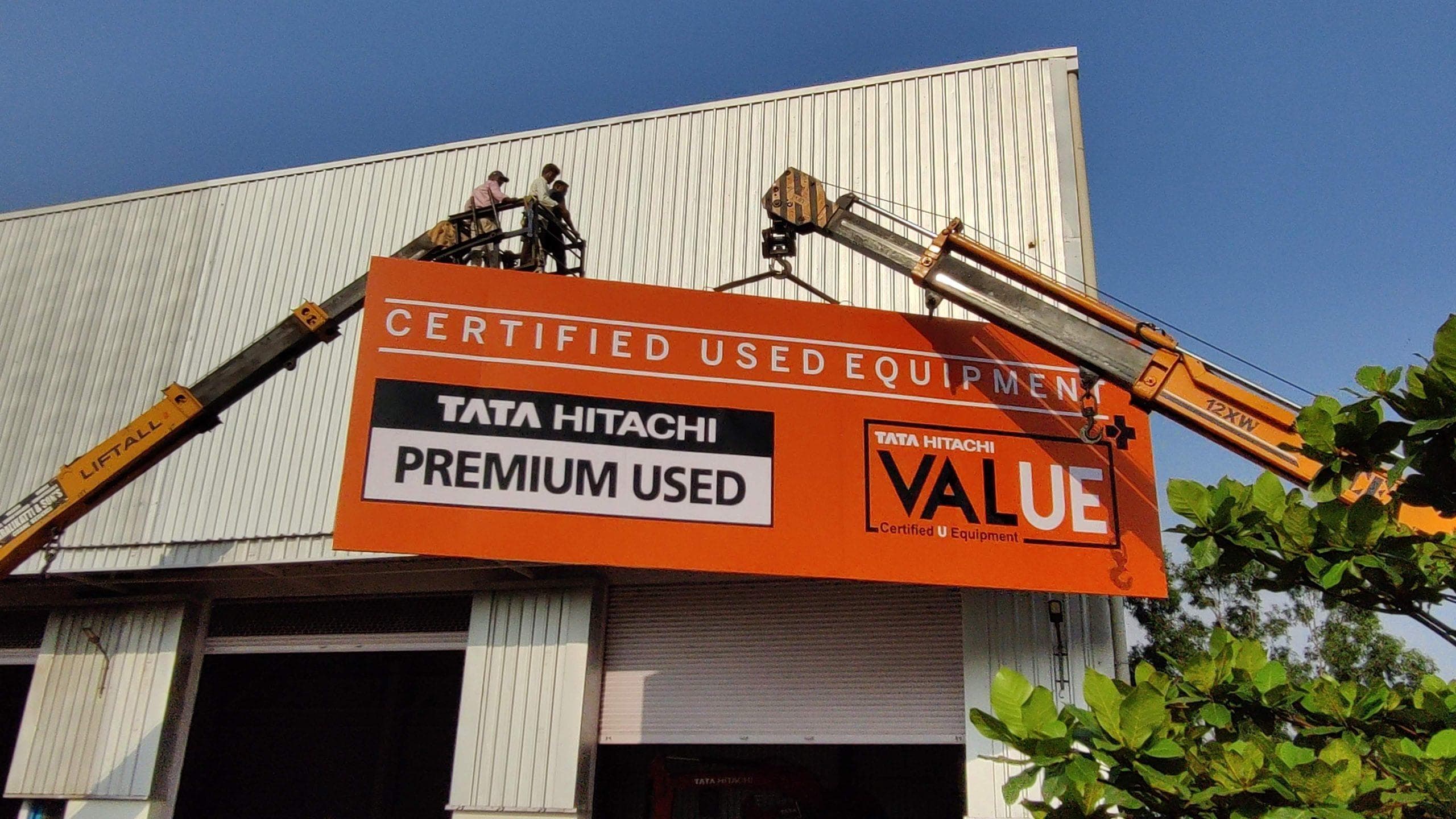
Rooftop signage is the most regulated category. A signage element installed on the roof of a building is typically treated as a separate structure requiring structural design certification, lightning protection, and in some cases an aviation NoC if the building is in proximity to an airport. The Karnataka building bye-laws address the structural certification through the requirement for a registered structural engineer's certificate. The aviation NoC requirement applies near Bengaluru's Kempegowda International Airport, the Hubballi airport, the Mysuru airport, and other operational airfields, with the obstruction limitation surface determining whether a particular height triggers the requirement. Procurement should validate the aviation requirement for any rooftop signage in airport approach areas as a critical-path item; the AAI's review process can take several weeks.
Heritage area signage is subject to additional restrictions in Mysuru's heritage core, Bengaluru's identified heritage precincts, and the heritage areas in other Karnataka cities. The restrictions cover signage size, materials, illumination, and visual character. Signage in heritage areas is often required to use traditional materials and muted colours rather than the bright illuminated branding common elsewhere. Procurement teams placing branding in heritage locations should engage with the local heritage conservation cell early in the design process; a design that ignores the heritage requirement will need expensive rework.
The building bye-law also addresses safety considerations during installation. Signage installation on a building facade involves working at height, often above public footpaths or roads. The installation contractor is required to take precautions including barricading the work area, providing safety nets where appropriate, restricting work during peak pedestrian hours, and obtaining traffic clearance if the work involves any encroachment on the road. The building owner has joint responsibility for ensuring these precautions are taken because incidents during installation can attract liability against the owner. Procurement contracts should specify that the signage vendor will comply with applicable safety regulations during installation and will hold the building owner harmless from any claims.
The permit application for outdoor advertising signage on a Karnataka building typically requires the building plan showing the proposed signage location, the structural certificate from a registered structural engineer for any non-trivial structure, the consent of the building owner if the applicant is a tenant, the dimensional drawing of the proposed signage, the photograph of the existing facade, and the prescribed application fee. The local body's advertising wing reviews the application and issues a permit valid for a defined period — typically one or two years — with renewal required thereafter. The permit is location-specific and signage-specific; changing the design or moving the signage triggers a fresh application.
For pan-India retail and BFSI brands rolling out signage across Karnataka cities, the operational reality is that each city's local body operates its own approval cycle within the common state framework. Bengaluru's BBMP, Hubballi-Dharwad's HDMC, Mysuru's MCC, Mangaluru's MCC, and Belagavi's BCC all have their own counters and their own processing timelines. Procurement should plan rollout schedules with city-specific permit timelines built in, rather than assuming a unified Karnataka-wide approval. Vendors with a presence in each city are better positioned to navigate the local processes than vendors operating only out of Bengaluru.
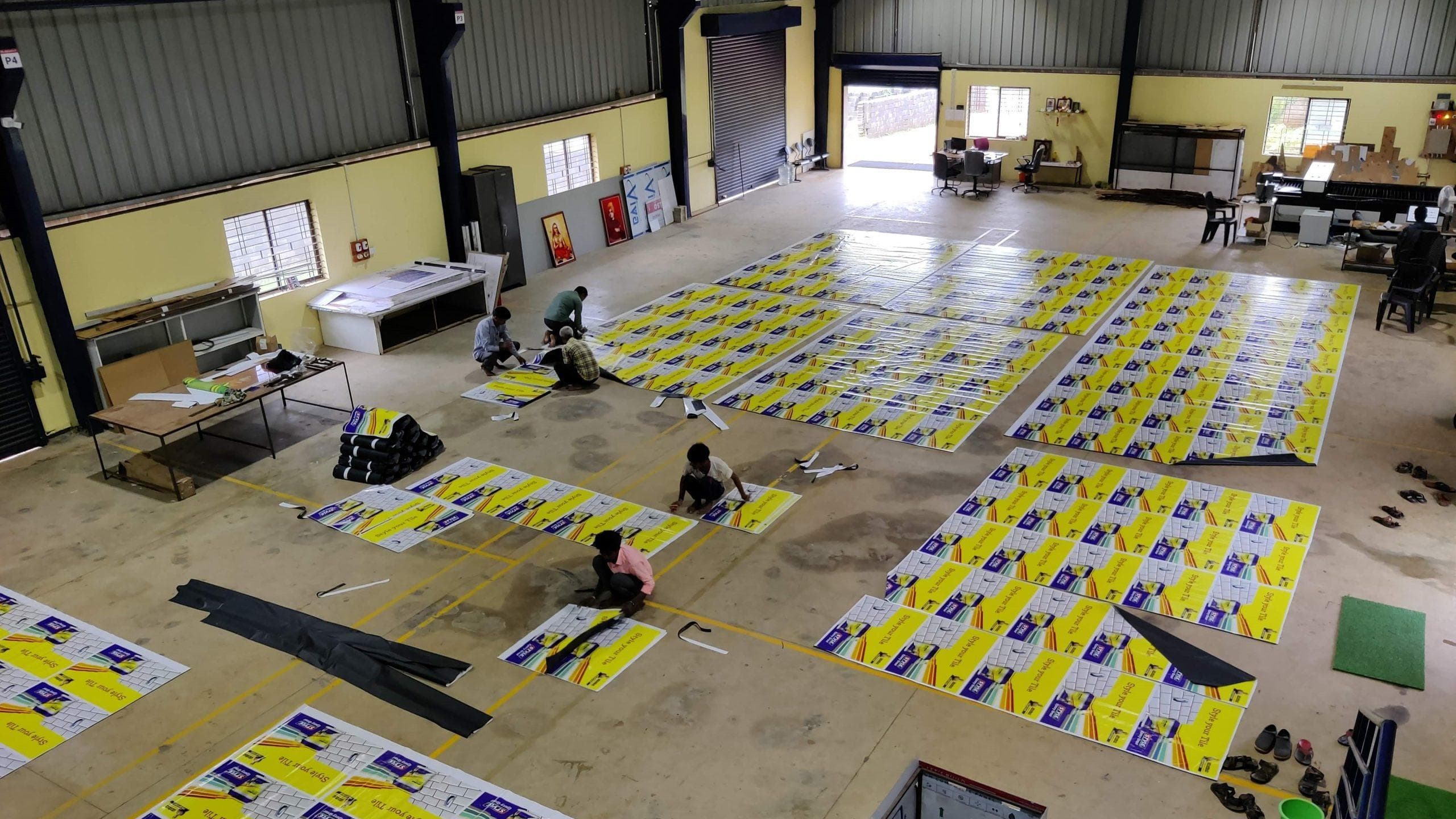
Sushant Industries is based in Dharwad and operates across Karnataka with deep familiarity with the local bye-law and approval landscape; the project documentation on /works includes Karnataka installations across the major cities and several Tier-2 markets. The infrastructure overview on /works also gives a sense of the fabrication and installation capacity that supports the multi-city Karnataka rollouts.
For procurement teams writing the Karnataka section of a national signage rollout RFP, the practical specifications to include are these. The vendor must obtain all required permits from the local body before installation. The vendor must provide a structural certificate for any signage above the prescribed dimensional threshold. The vendor must comply with the local outdoor advertising policy including illumination and switch-off requirements. The vendor must obtain aviation clearance if the location is in an airport approach area. The vendor must use heritage-appropriate materials in identified heritage precincts. And the vendor must hold the customer harmless from any claim arising from non-compliance with these requirements.
The summary view for Karnataka is that the framework is well defined but city-specific in execution. A vendor with documented experience across multiple Karnataka cities is the right partner for a state-wide rollout. A vendor with experience only in Bengaluru will struggle on the first non-Bengaluru installation.