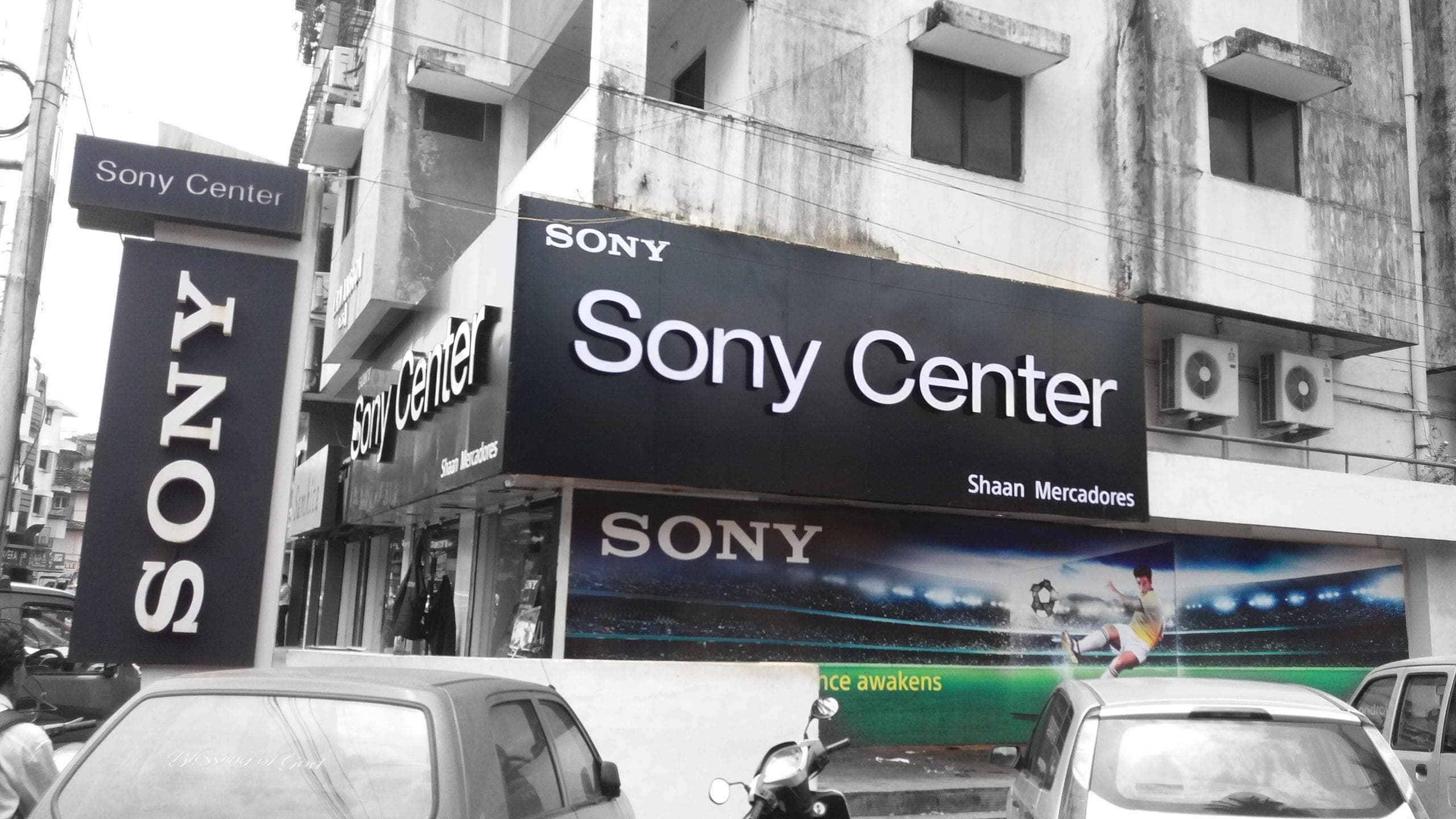
A channel letter sign looks simple from across the street. A three-dimensional letter form, illuminated, mounted on a wall. The visual simplicity hides what is actually a precision assembly of six material categories, four production processes, and a structural fixing strategy that has to survive monsoon, summer heat, and a service interval measured in years rather than months.
Understanding the anatomy matters because procurement teams who buy channel letter signage on price alone usually end up paying twice. The compromise on materials, finishing, or LED quality manifests as a service-call frequency that destroys any initial saving over the asset life.
The substrate. The body of the channel letter is fabricated from aluminium composite panel for cost-sensitive projects, from solid aluminium sheet for higher-end installations, or occasionally from galvanised steel for situations requiring specific structural strength. Aluminium composite is the dominant material for retail channel letters because it offers a good balance of weight, weather resistance, and finishability. The thickness selection (typically 3mm or 4mm) is not a cost decision, it is a structural decision driven by the letter size and the wind load at the install location. A 1200mm-tall letter on a coastal facade should not be fabricated from 3mm composite regardless of what the budget says.
The return. The vertical face of the letter (the side that wraps from the front face back to the wall) is called the return. Returns are typically fabricated from aluminium coil that is roll-formed to a specified depth (50mm to 150mm depending on the design intent) and then welded or riveted to the back of the front face. The return depth determines the visual presence of the letter and also affects the LED module spacing inside the letter cavity. Deep returns require more LED modules to maintain even illumination across the front face. Shallow returns can suffer hotspot effects where the LED point sources are visible through the front face.
The face. The front face of a front-lit channel letter is typically acrylic, in a translucent grade specifically engineered for sign-face applications. The acrylic thickness is usually 3mm to 5mm depending on letter size and required impact resistance. The color of the face determines the lit appearance: a white face produces a uniform white glow, a colored face produces a colored glow that matches the brand specification when illuminated. Face material can also be vinyl-applied composite for specific design intents, but acrylic remains dominant for premium installations because of its lit-state uniformity and edge clarity. The face is bonded or mechanically retained to the return using a combination of structural adhesive and clip-on trim.
The trim cap. The visible joint between the face and the return is finished with a trim cap, typically a polycarbonate extrusion in a contrasting or matching color. The trim cap serves three functions: it covers the mechanical joint, it provides a clean visual line around the perimeter of the letter, and it weatherseals the joint against rain ingress. Cheap trim caps yellow and crack within a few years. Quality trim caps last the life of the sign.
The LED illumination. Modern channel letters are illuminated with surface-mount LED modules, typically arranged in a string and adhered to the back panel of the letter cavity. Module selection matters: high-quality LED modules offer color stability, lumen consistency, and an output range matched to the face material's translucency. Module spacing matters: too sparse and you get visible hotspots, too dense and you waste cost without improving uniformity. The driver unit is sized to the total wattage and selected for its IP rating, which determines whether it can be installed inside the sign cavity or needs a separate weatherproof enclosure.
The back. The back panel of the letter cavity closes the letter and provides the surface to which LED modules are mounted. The back is typically aluminium sheet or composite, drilled or punched at the wire entry points and at the mounting points. The back panel is also where the structural mounting hardware attaches, transferring the weight of the letter to the wall fixing.
The mounting. Channel letters can be mounted in several configurations. Direct flush mount uses studs that pass through the back panel into wall anchors. Stand-off mount uses spacer studs that hold the letter 25mm to 50mm off the wall, creating a halo effect with reverse-lit modules and adding visual depth. Raceway mount uses a horizontal aluminium box behind the letters that contains the wiring and provides a single-point structural attachment to the wall. Each mounting strategy has implications for weather sealing, wire routing, and visual presentation.
The electrical run. The wiring from the LED modules exits the back of the letter through a sealed grommet, runs along the back of the raceway or directly to the driver unit, and then to the building's electrical supply. The electrical run requires careful attention to weather sealing at every penetration, to load matching between modules and driver, and to circuit protection upstream of the sign. Poor electrical execution is the single largest cause of post-install failure in channel letter installations.
The finishing. The visible exterior surface of the return and the back is finished with powder coating, typically in a brand-specified color. Powder coat applied over a properly prepared aluminium surface lasts ten to fifteen years without significant degradation. Powder coat applied over a poorly prepared surface, or substituted with spray paint to save cost, fails within two to four years. The finishing scope is one of the easiest places for vendors to cut cost invisibly, and one of the most damaging places to do so.
The variations. Front-lit channel letters illuminate the face directly. Reverse-lit (halo) channel letters illuminate the wall behind the letter, creating a glowing outline. Combination channel letters do both, creating a face glow with a halo accent. Each variation requires different LED placement, different face material, and different mounting strategy. The brand intent should drive the variation choice.
The sizing economics. Channel letter cost scales non-linearly with letter height. A 300mm letter is meaningfully cheaper than a 600mm letter, which is meaningfully cheaper than a 1200mm letter. The non-linearity is driven by material thickness scaling, structural fixing complexity, and LED module count. Procurement teams should benchmark per-letter cost at the specified size, not generic per-letter cost.
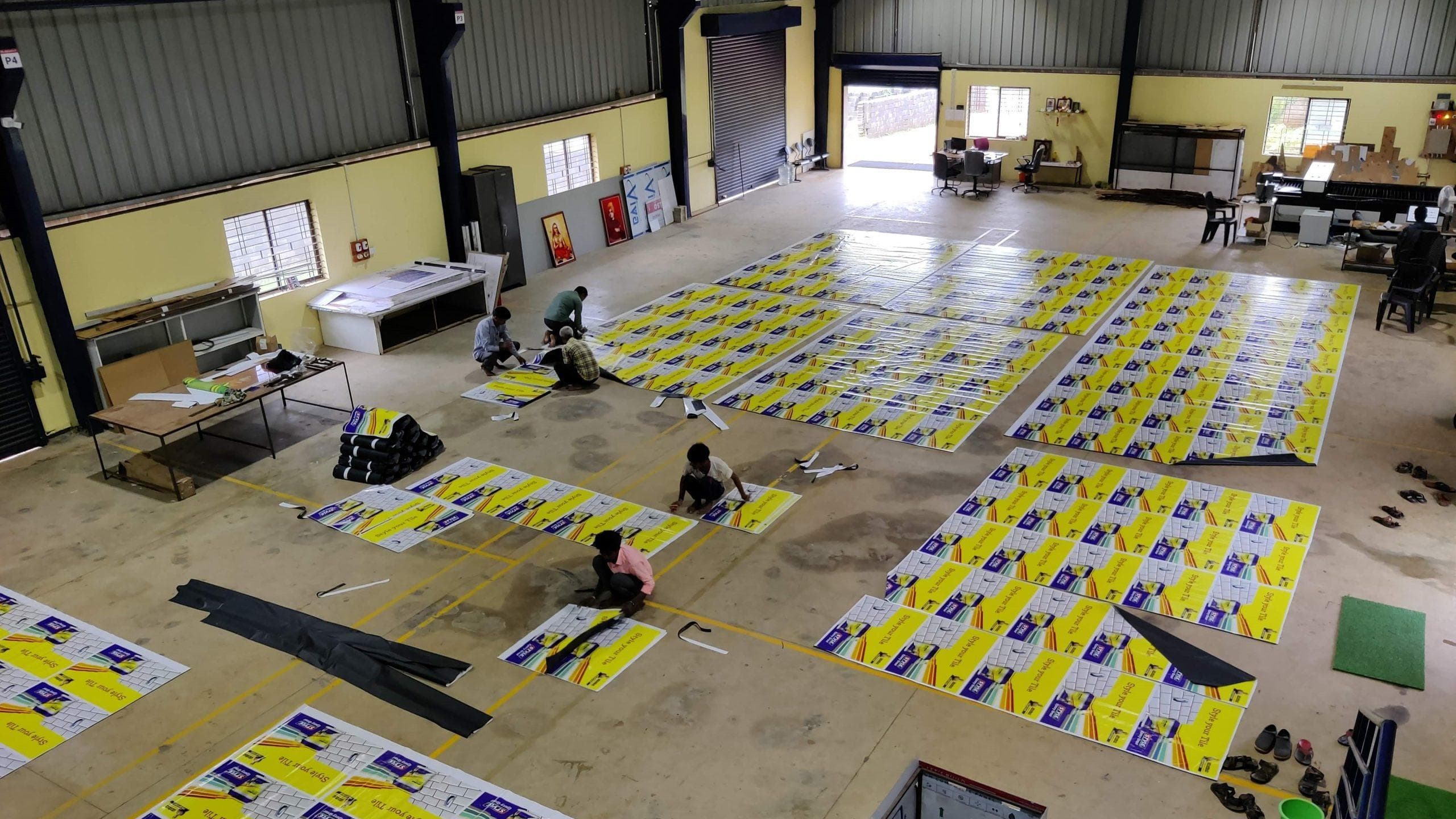
The assembly sequence at the workshop. Letter outlines are CNC-routed from the chosen substrate. Returns are roll-formed and welded. Faces are CNC-cut to match the letter outline. LED modules are mounted to the back. Wiring is run. Faces are bonded with trim cap retention. Each letter is electrically tested. The complete letter set is dry-assembled flat in the workshop to verify alignment and spacing before packaging.
The install sequence on site. The letter array is laid out on the wall using a paper template that mirrors the design drawing. Mounting points are marked, drilled, and anchored. Letters are mounted one at a time, with electrical connections terminated at the raceway or directly to the driver. The system is energised and tested. Final alignment is checked from across the street, where the brand will actually be viewed.
Understanding the anatomy lets procurement teams ask the right questions, evaluate vendor capability with rigour, and predict service-life economics over a multi-year horizon. For projects where channel letter signage is part of the brand standard, our /services pages cover specifications, the /works gallery shows installations across categories, and the /quality page covers the production controls that govern channel letter fabrication.